Full-Label Transparency: Why It Matters More Than You Think
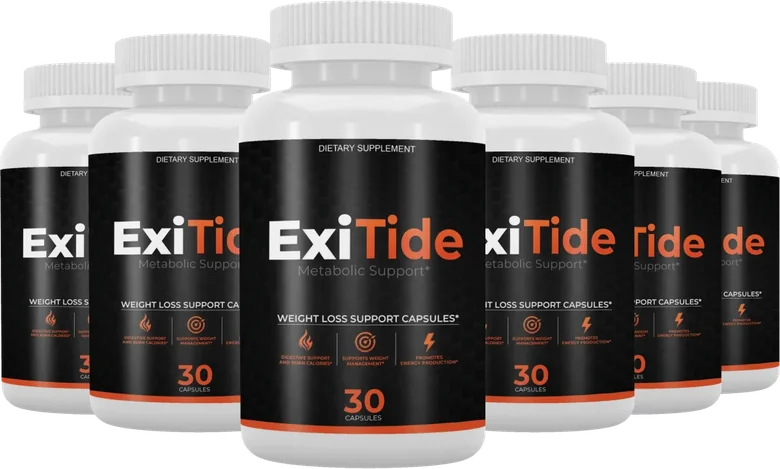
Most weight-management supplements disclose partial dosing at best, or hide ingredients inside an undisclosed proprietary blend entirely. ExiTide discloses all eleven.
Understanding why this matters, and how to use full transparency to your advantage, helps you evaluate any supplement more effectively.
The two common alternatives to full disclosure
The undisclosed proprietary blend: ingredients are named, but grouped under one combined weight with no individual breakdown. You know what is in the product, but not how much of any single component.
Partial disclosure: some ingredients (often minerals or vitamins) get exact amounts, while others (often botanical extracts or proprietary compounds) do not.
Why full disclosure is genuinely rare
Disclosing every ingredient's exact amount removes a brand's ability to adjust formulations quietly over time without buyers noticing, and it opens every single component to direct comparison against published research doses. Both of these cut against common industry incentives, which is part of why full transparency remains uncommon.
What full disclosure lets you actually do
Compare every ingredient against research doses. With ExiTide's label, you can check each of the eleven ingredients — from Riboflavin's 25mg to Akkermansia Muciniphila's 1 billion CFU — against what published studies have used.
Spot genuinely underdosed ingredients. As covered in our pieces on Berberine and Konjac Fiber, full disclosure reveals that some ingredients here sit below typical research doses — information you simply could not access with an undisclosed blend.
Make an informed choice either way. Full disclosure does not guarantee every dose is optimal, but it does mean you are deciding based on real numbers rather than trusting a marketing claim you cannot verify.
Applying this to ExiTide
ExiTide's full eleven-ingredient disclosure is a genuine, checkable strength — even though it also reveals that a few ingredients (notably Berberine and Konjac Fiber) sit below typical clinical research doses. That transparency is exactly what let us make that comparison in the first place.